
Mechangelion - Robot Fighting
MOONEE PUBLISHING LTDCasual
4.62.65K Reviews
- Version
- 3.5
- Installs
- 50.00M
- Age Rating
- Everyone 10+
Screenshots
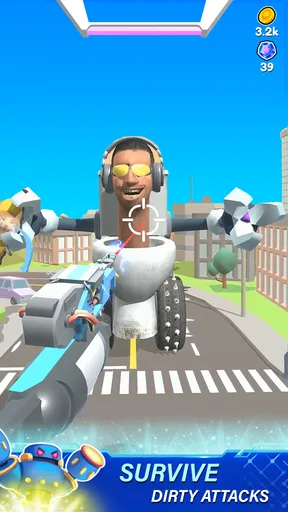
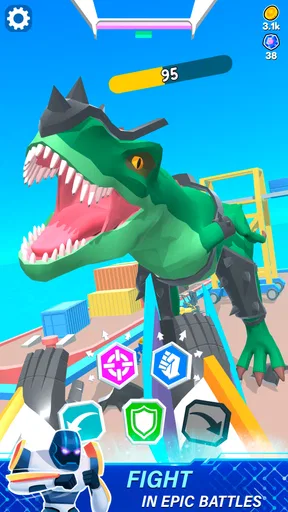
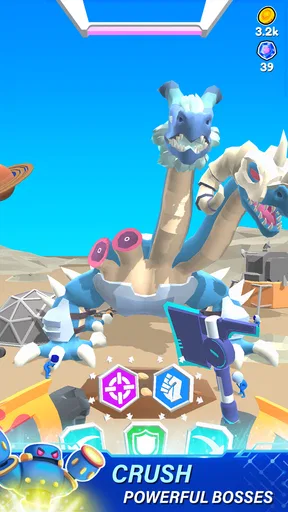
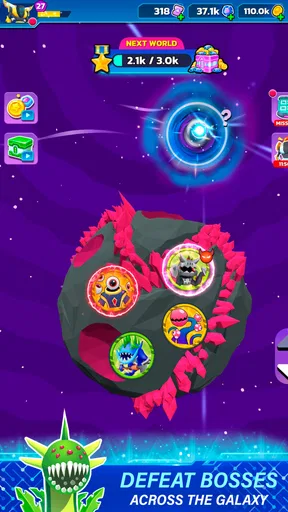

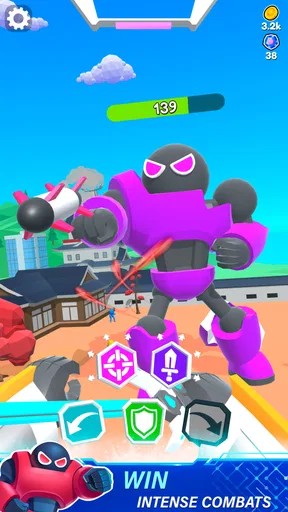
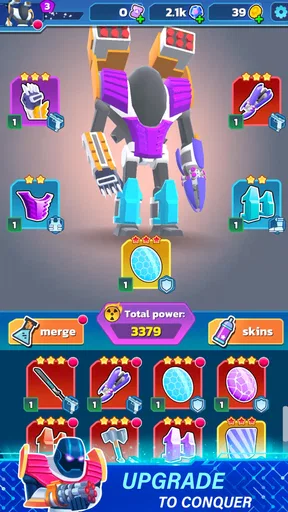
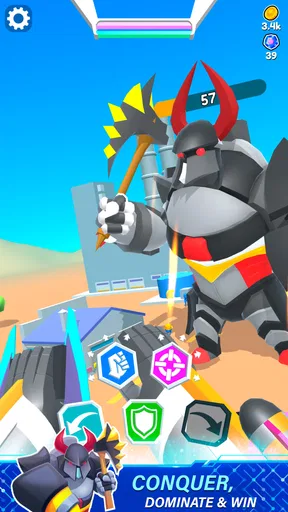
Our Review of Mechangelion - Robot Fighting
 Analysis by Appyee
I went into Mechangelion - Robot Fighting expecting a quick casual game built around flashy robot battles, and that is exactly where it fits best. It is a free game from MOONEE PUBLISHING LTD, aimed at players who want short bursts of mech action rather than a deep simulation or a long story campaign. The central appeal is easy to understand: step into an arena, control a powerful machine, and work through fights that gradually ask more from you.
That simple premise matters because the game does not need much explanation before it becomes playable. I could understand the objective almost immediately, which makes it a natural choice for a short break, a commute, or a few minutes when I wanted something more active than a puzzle. At the same time, its straightforward design means the quality of each encounter carries a lot of weight. If the battles feel fresh, the game is easy to keep opening. If they begin to feel repetitive, there is less around them to distract from that repetition.
The game is listed as a casual title, but the robot theme gives it a more energetic feel than many lightweight mobile games. It is not trying to recreate a full console-style mech combat experience. Instead, it packages the fantasy of being a steel warrior into a format that is quick to learn and comfortable on a phone. That makes it approachable, though players looking for detailed customization, a large narrative, or highly technical combat should set their expectations accordingly.
How the early battles establish the game
The strongest part of the opening is its clarity. A new player does not need to study a complicated menu structure or learn a long list of systems before understanding the purpose of a match. The arena setting gives every early encounter a clear direction, and the robot-versus-robot theme supplies enough visual identity to make the action feel more distinctive than an anonymous fighting game.
I also like that the early goals are easy to read. The immediate task is not buried under a large collection of side activities. You enter a fight, deal with the opposition, and look toward the next challenge. That direct rhythm suits the casual category well because it lets the game fit around the player rather than demanding a large uninterrupted session.
For someone deciding whether to install it, this is an important distinction. The game works best when you want an accessible action loop, not when you want to spend an evening planning a long-term build. I would recommend it to a player who enjoys the feeling of clearing one encounter and then seeing what comes next. I would be less likely to recommend it to someone whose main reason for playing mobile games is collecting a large cast, following a detailed plot, or mastering an elaborate competitive system.
The first few sessions also reveal the game’s intended audience. Younger players can understand the robot theme and the basic objective without needing much genre knowledge, while adults can pick it up quickly when they have only a small amount of free time. Its Everyone 10+ content rating places it in a broadly accessible range, although the arena format and combat focus will naturally appeal more to players who enjoy action than to people seeking something calm.
One practical tip is to treat the opening not just as a tutorial period, but as a test of whether the core rhythm suits you. Pay attention to how satisfying the individual fights feel before getting invested in the idea of long-term progression. In a game this focused, the moment-to-moment action is more important than any promise of future unlocks. If the basic encounters already feel enjoyable, the later goals have a solid foundation. If they do not, additional progress alone may not solve that problem.
Progress feels clearest when each fight has a purpose
What kept me interested was the sense that each completed encounter was part of a forward path rather than an isolated match. Casual games often struggle with this balance: they can be easy to start but give little reason to continue. Here, the arena structure provides a visible reason to keep moving, because finishing one fight naturally points toward another.
The progress signals are most effective when they stay close to the action. A player does not need a complicated explanation to understand that winning is useful and that the next stage represents a new test. This is a good design choice for mobile play, where too many menus can make a small game feel slower than the battles themselves.
Still, the game’s progression should be viewed as a light framework rather than a replacement for a full role-playing system. I would not approach it expecting the same depth as a dedicated mech builder or a strategy game with extensive unit management. The satisfaction comes from advancing through fights and handling the next obstacle, not from spending long periods comparing statistics or designing a highly specialized machine.
That makes the game particularly suitable for a simple everyday scenario. Imagine having ten minutes before an appointment. A large online game may be inconvenient because it asks you to commit to a long match, while a story-heavy title may leave you searching for your place after a break. This game is easier to pick up with a clear immediate objective. I could play a little, stop when necessary, and return later without needing to reconstruct a complicated plan.
There is also a useful trade-off in that simplicity. The player spends less time managing progress, but that also means there are fewer ways to create a personal strategy outside the fights. If you enjoy choosing between many upgrade paths or building a unique loadout, the streamlined structure may feel restrictive. If you prefer action over administration, it is an advantage.
The challenge curve rewards attention more than lengthy preparation
A good casual fighting game should not make the opening punishing, but it also cannot remain completely effortless. My impression is that the challenge is designed to grow through the encounters themselves rather than through a heavy preparation phase. That keeps the game moving and makes improvement feel connected to how I handled the arena, not only to how long I spent in menus.
This approach gives the game a useful learning curve. Early fights let the player settle into the controls and understand the visual language of the battles. Later encounters are more meaningful because they ask whether the player has actually adapted. The best way to respond is usually to slow down for a moment, watch what is happening, and avoid treating every fight as a race to attack constantly.
That is one of the less obvious strengths of the format: a simple control scheme does not necessarily mean every decision is meaningless. Even when the overall structure is accessible, timing and awareness can determine whether a battle feels controlled or chaotic. I found it more satisfying to approach difficult moments with a little patience than to repeat the same aggressive input and hope it worked.
At the same time, players should not expect a perfectly even difficulty curve. Mobile casual games often use short encounters to create quick rises and falls in tension, and that can make some stages feel more demanding than others. When a battle suddenly takes more attempts, the change can be motivating if I understand what I need to improve. It can be frustrating if the obstacle feels like a simple interruption to the otherwise brisk rhythm.
My advice is to use a failed attempt as information rather than immediately treating it as a reason to spend money. First, identify whether the problem was timing, positioning, or simply rushing. A short pause before trying again can be more useful than repeating the same approach. This is especially relevant for players who are accustomed to casual games that can be cleared almost automatically; the robot arena occasionally benefits from active attention.
Where the pacing stays engaging and where it can wear thin
The pacing is built around quick motivation: fight, finish, and continue. That structure is effective because it avoids a slow introduction and gives the player frequent moments of completion. It also makes the game a good companion for fragmented free time. I can imagine playing it while waiting for food, taking a short break from work, or relaxing at home without needing to reserve a whole session.
The limitation is that a focused loop can expose repetition sooner than a broader game would. There is no need to criticize the game for not being something it never set out to be, but it is fair to say that long sessions may feel less varied than short ones. The robot theme and arena presentation provide personality, yet the experience still depends heavily on whether the player enjoys repeating combat encounters.
This is where retention pressure becomes important. The game encourages another attempt by placing a new fight ahead, but that alone may not be enough for every player. Some people are motivated by visible progression and the satisfaction of overcoming a specific obstacle. Others need constant novelty, social competition, or a large collection of things to unlock. The former group is more likely to stay with this game than the latter.
I also think the free-to-play structure deserves a measured look. The game is free to download, while optional in-app purchases range from $0.99 to $99.99 per item. That is a wide span, so I would recommend checking each purchase carefully and deciding in advance whether you want to spend anything. The most comfortable way to approach the game is to treat purchases as optional rather than as part of the basic admission price.
For me, the key question is whether a purchase would solve a genuine frustration or merely shorten the satisfaction of earning progress. If I am enjoying the challenge, removing too much resistance can make the later fights less meaningful. On the other hand, a player who dislikes repeating difficult encounters may see optional spending as a convenience. Either way, setting a personal limit before playing is sensible, especially in a game designed around repeated short sessions.
What the technical details mean for everyday use
The current version is 3.5, and the game supports devices running Android 8.0 or later. That makes it relevant to people using older Android phones, although performance can still depend on the individual device and how it handles 3D action. I would close other demanding apps if the game feels slow, particularly on a phone with limited free storage or memory.
Its popularity is also notable: the game has passed 50 million installs and holds a 4.6 average from around 101 thousand ratings. Those figures suggest that the basic concept has reached a large audience, but popularity should not be confused with universal suitability. A widely installed casual game can still be the wrong choice for someone who wants deep systems or a serious competitive environment.
The game has been available since November 15, 2022, which gives it enough time to establish its identity rather than feeling like an untested experiment. I would still judge it by the current experience, not by its age. For a new player, the practical concerns are simpler: does the phone meet the operating-system requirement, do you enjoy short arena battles, and are you comfortable with the optional purchase model?
One useful workflow is to play in short sessions at first instead of immediately trying to push through as much content as possible. That makes it easier to notice whether the pacing remains satisfying after the novelty of the robot theme settles. It also helps you recognize where the challenge becomes more demanding without turning the game into a frustrating marathon.
Who should choose this over other casual games
I would choose this game over a typical match-three title when I wanted direct action and a stronger sense of physical confrontation. I would choose it over a slow strategy game when I had no interest in planning several turns ahead. Compared with an endless runner, it offers a more deliberate arena focus: the appeal is not simply surviving a constantly moving track, but dealing with a defined opponent and moving toward the next battle.
Those comparisons also show its boundaries. If you prefer relaxing puzzles, the combat theme may feel too active. If you want an endless runner’s instant reflex loop, the arena structure may feel less continuous. If you want a full mech game with detailed parts, complicated builds, and extensive tactical choices, this casual format will probably seem too light.
The best audience is someone who likes recognizable goals, compact sessions, and the fantasy of controlling a robot without having to learn a complex ruleset. It is also a reasonable pick for families looking for an accessible action game within the Everyone 10+ age range. I would skip it if my main priority were a rich narrative, deep customization, or a multiplayer community built around long-term competition.
Another realistic use case is travel. During a short train ride, I would rather have a self-contained arena game than something that depends on maintaining a long chain of decisions. The clear fight-by-fight structure makes it easier to stop when I arrive. That convenience is a genuine strength, although players should still consider their own data and battery situation when playing mobile action games away from home.
My verdict on goals, unlocks, and staying power
After spending time with it, I see Mechangelion - Robot Fighting as a focused casual action game whose strongest design choice is its directness. The early goals are understandable, the progress path is easy to follow, and the challenge has enough room to make later fights feel like more than automatic victories. It does not need a large collection of systems to deliver a satisfying short session.
Its staying power depends on what motivates you. If you enjoy clearing one arena and testing yourself against the next obstacle, the compact progression can keep the game appealing. If you need constant variety, extensive unlocks, or a strong story to maintain interest, the same focused structure may begin to feel narrow. That is not a flaw for every player, but it is the central trade-off.
I appreciate that the game can be enjoyed as a quick free download while still offering enough challenge to reward attention. I also think the purchase range deserves caution, and I would not recommend spending simply to rush past an obstacle before understanding the basic combat rhythm. The better experience comes from finding out whether the game’s pacing works for you first.
Overall, I would recommend it to casual players who want a colorful robot arena game that starts quickly and fits naturally into short breaks. I would point dedicated mech fans toward a deeper alternative if they want detailed engineering or strategy. For everyone between those extremes, this is an easy game to try, and its large audience is understandable: the battles are accessible, the goals are clear, and the best sessions deliver a satisfying sense of forward motion without demanding a major time commitment.
Verdict
Strengths of Mechangelion - Robot Fighting
- Fast-paced robot battles are easy to learn but remain satisfying.
- Numerous mech designs offer variety in combat style and appearance.
- Short matches work well for quick gaming sessions.
- Upgrade options let you improve your robot’s strength and abilities.
- Bright 3D visuals make the fights enjoyable on modern devices.
Limitations of Mechangelion - Robot Fighting
- Progress can feel repetitive after playing similar battles repeatedly.
- Some upgrades may require considerable time or in-game resources.
- The game may include frequent ads between matches.
- Later opponents can create difficulty spikes for casual players.
- A stable internet connection may be needed for some features.
Other Releases by MOONEE PUBLISHING LTD
View All
Find the Alien - Alien Game
Casual4.5

Elemental Gloves - Magic Power
Arcade4.6

Monsters Gang 3D: beast fights
Action4.6

Balls and Ropes: Cut 'n Bounce
Arcade4.3
Similar Picks in This Category
View All
My Talking Angela
Outfit7 Limited4.2

My Talking Tom
Outfit7 Limited4.3

Pou
Zakeh4.2

My Talking Tom 2: Pet Game
Outfit7 Limited4.3

Candy Crush Saga
King4.6

Bridge Race
Supersonic Studios LTD4.1
Frequently Asked Questions
What is Mechangelion - Robot Fighting?
Mechangelion - Robot Fighting is an action game focused on controlling powerful combat robots in fast-paced battles. You fight enemies, complete missions, and improve your machine with new abilities and equipment. The game combines arcade-style combat with progression elements, making it suitable for players who enjoy giant robots, destructive arenas, and short battles that can be played in quick sessions.
How does the combat system work in Mechangelion - Robot Fighting?
Combat is built around movement, attacks, defensive actions, and timing. Players guide their robot through each encounter, using available weapons and abilities to defeat opponents while avoiding incoming damage. Battles are generally easy to understand at the beginning, but later stages require better positioning, quicker reactions, and thoughtful use of upgrades rather than simply tapping through every fight.
Can I upgrade and customize my robot?
Yes, progression is an important part of Mechangelion - Robot Fighting. As you advance, you can improve your robot’s combat performance through upgrades and stronger equipment. These improvements help increase damage, survivability, and overall effectiveness against tougher enemies. Players should consider which enhancements best match their preferred style, since focusing on offense alone may make difficult encounters harder to survive.
Does Mechangelion - Robot Fighting require an internet connection?
Internet requirements may vary depending on the version and device, so players should check the information shown on the Google Play Store or App Store before downloading. Some parts of the game may work without a constant connection, but advertisements, updates, cloud-related features, or certain online services can require internet access. A stable connection is recommended for the smoothest experience.
Is Mechangelion - Robot Fighting free to download and play?
Mechangelion - Robot Fighting can generally be downloaded without an upfront purchase, but the free version may include advertising and optional in-app purchases. These purchases can provide resources, upgrades, or other conveniences, although spending is not necessarily required to try the main gameplay. Parents should review the store settings and payment controls before allowing children to play.
Play our best games!


